Quick answer: Cross-border video consults can help with education, second opinions, and follow-up — but they cannot replace emergency care or hands-on exams. Licensing rules usually follow where you are sitting during the call.
Educational content from DoctorBookly Editorial. Not personal medical advice, diagnosis, or treatment. Always consult a licensed clinician. For emergencies, call your local emergency number.
When telehealth across borders is useful
- Understanding a diagnosis you already received
- Preparing questions before travel for treatment
- Reviewing lab or imaging reports you can share securely
- Chronic-condition education (not a substitute for local prescribing rules)
When you still need in-person care
- Emergencies and sudden severe symptoms
- New unexplained pain, neurological changes, or high fever in infants
- Procedures, imaging that must be performed, vaccinations, physical exams
- Situations needing local prescriptions controlled by national pharmacy law
Licensing and privacy (simple view)
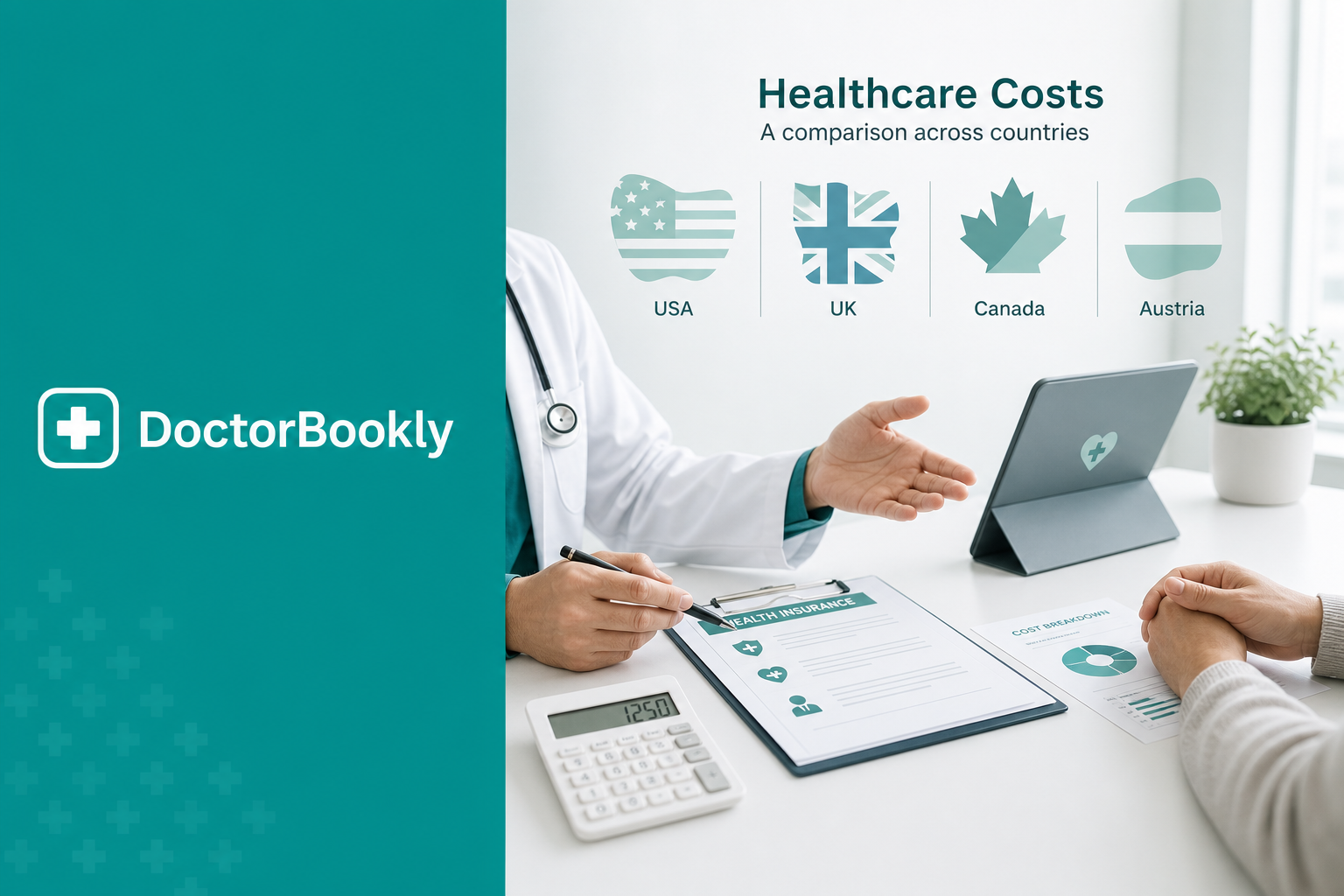
Patients in the USA, UK, Canada, and Austria often assume “online means anywhere.” In practice, clinicians are typically regulated by the place they are licensed — and sometimes by where the patient is located. Before you book:
- Ask where the clinician is licensed.
- Ask whether they can see patients in your country.
- Ask how your data is stored and shared.
How to prepare for a useful video visit
- List symptoms with dates and severity.
- Upload or have ready recent reports (PDF photos are better than memory).
- Note all medicines and allergies.
- Write your top three questions.
- Confirm what happens next if they recommend local urgent care.
Find local clinicians when you need them
After a telehealth discussion, use DoctorBookly to find nearby doctors, hospitals, and labs for in-person follow-up.
FAQ
Can telehealth prescribe across borders?
Often no — or only under strict rules. Do not assume a video visit automatically includes a valid local prescription.
Is a second opinion via video worthwhile?
It can be, especially with complete records. It is still educational support unless the clinician is authorized to manage your care where you live.